Premium Industrial Acoustic Support

Chemical Plants

Chemical plant noise control is a critical part of keeping industrial facilities safer, more efficient and more comfortable for teams working around compressors, pumps, ventilation systems and process equipment. At EchoShield Acoustic, we support chemical and process industries across India with site-specific acoustic treatment, corrosion-resistant material planning and professional installation for demanding plant environments. If your facility needs better noise reduction without affecting access, airflow or operations, our team can help with a practical solution designed around your site conditions.

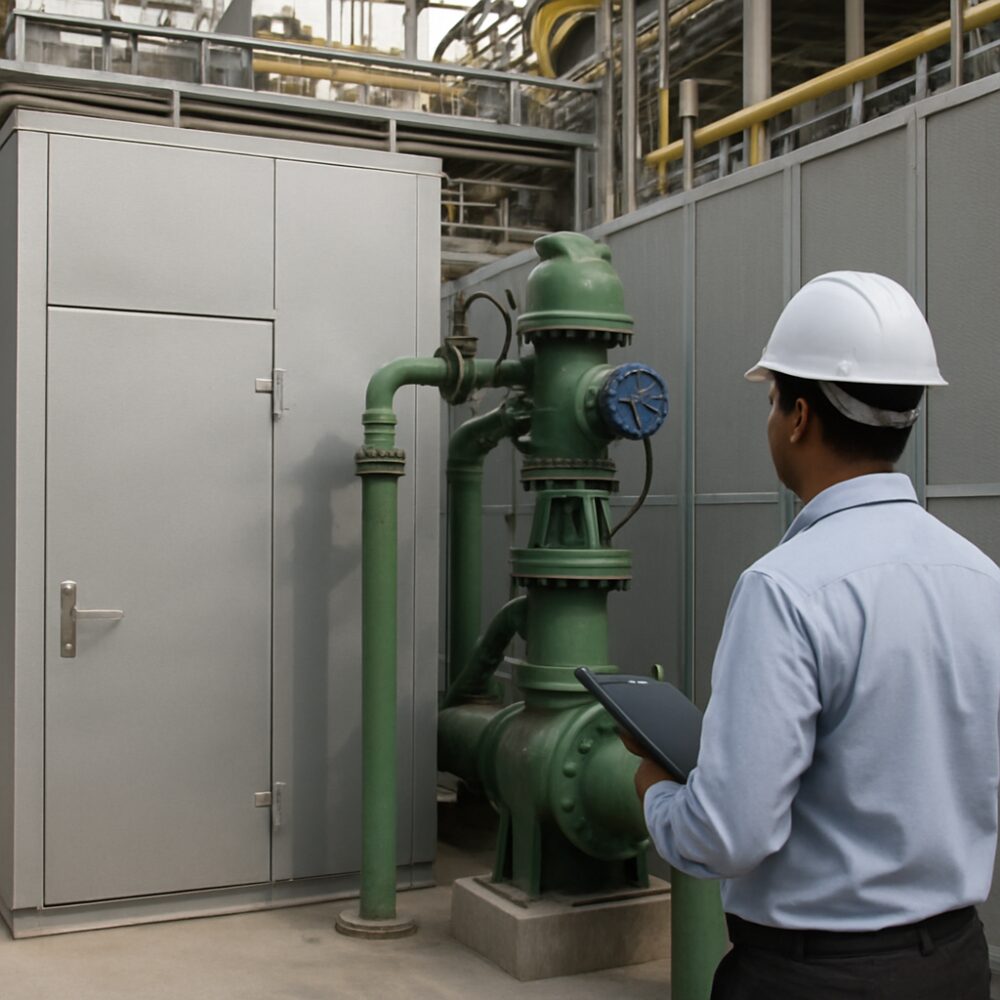
Chemical Plants - chemical plant noise control support by EchoShield Acoustic for India

Acoustic Project Desk

A premium project flow for requirement review, acoustic planning, quotation, manufacturing and installation support across India.

Pan-India Acoustic Coverage

Acoustic and noise-control solutions for industrial, commercial and architectural projects across India.

01

Requirement Review

Share site details, machine data and noise concerns for structured next-step guidance.

02

Acoustic Assessment

Coordinate the acoustic approach based on equipment, site and performance expectations.

03

Design & Quotation

Get help with solution design, specifications, budget planning and quotation.

04

Installation Support

Stay connected during manufacturing, installation and handover coordination.

A Premium Acoustic Project Journey, Planned Step by Step

From first requirement review to installation support, the page experience guides buyers with clarity and trust.

01

Share Requirements

Send machine details, drawings, photos and noise requirements.

02

Acoustic Review

The requirement is reviewed for suitable acoustic treatment, enclosure or barrier options.

03

Quotation Planning

Receive quotation guidance based on dimensions, materials, site conditions and installation scope.

04

Execution Support

Plan design, fabrication, transport, installation and handover support.

05

Project Execution

Get coordination during manufacturing, delivery, installation and project support.

06

Project Follow-up

Continue with post-installation guidance and project support where applicable.

Chemical Plant Noise Control for Demanding Industrial Environments

Chemical plants often operate with multiple noise sources at the same time, including rotary compressors, pumps, blowers, ventilation systems, dosing equipment and utility areas. In many facilities, the acoustic challenge is not just sound level but also corrosion, dust, moisture, cleaning requirements and the need to maintain safe access around equipment. A well-planned chemical plant noise control system helps improve acoustic comfort, support safer working conditions and reduce nuisance noise for surrounding areas.

Because each plant is different, the right solution depends on machine type, layout, ventilation paths, maintenance access, safety zones and the nature of the chemical process. EchoShield Acoustic focuses on custom acoustic planning rather than one-size-fits-all products. That means we assess the plant, understand the operational constraints and recommend the most suitable combination of enclosures, barriers, silencers and sound-absorbing finishes.

What This Means for You

What This Means for You

Why Acoustic Treatment Matters in Chemical Plants

In chemical and process plants, excessive noise can affect communication, concentration and operational comfort. It can also make supervision and routine checks more difficult in busy production areas. While acoustic treatment is not only about comfort, it can also support better workflow by helping teams communicate more clearly near machines and safety zones.

For chemical facilities, the acoustic design must also respect plant realities such as air movement, heat dissipation, washdown needs and equipment servicing. That is why proper noise control is important: it must reduce unwanted sound while still allowing the plant to function as intended.

How EchoShield Acoustic Helps Chemical and Process Facilities

EchoShield Acoustic provides a practical, end-to-end approach to industrial noise control. Our support covers site survey, acoustic assessment, design guidance, manufacturing, supply and professional installation. We work with plant owners, consultants, contractors and procurement teams to define a solution that fits the site, not just the catalogue.

For chemical plant applications, we often recommend a combination of the following depending on the noise source and installation conditions.

What This Means for You

What This Means for You

Chemical Plant Noise Control Solutions We Commonly Recommend

Every chemical plant has different noise priorities. Some need equipment enclosures. Others need boundary noise management. In many cases, the best result comes from a combined approach.

Our solution planning typically focuses on corrosion-resistant, durable and maintainable construction. Depending on the exposure conditions, this may include suitable coated metal finishes, moisture-resistant absorbent materials and hardware selected for industrial service. Final material selection should always be based on site inspection and operating conditions.

Applications in Chemical and Process Industries

Our chemical plant noise control solutions are suitable for a wide range of industrial and infrastructure environments where noise, airflow and safety planning must work together. We support projects for facilities such as chemical manufacturing units, process plants, utility blocks, pump rooms, equipment houses and ancillary service areas.

We also assist commercial and infrastructure buyers who need industrial acoustic planning for plant rooms, service zones and boundary-facing equipment. For broader factory requirements, you can also explore our related pages on [Industrial Noise Control], [Noise Barrier Solutions] and [Acoustic Consultation].

What This Means for You

What This Means for You

Our Step-by-Step Process

A successful industrial acoustic project starts with understanding the site correctly. We follow a clear process so that plant teams know what to expect at each stage.

Materials and Design Considerations for Chemical Plants

Chemical facilities often need more than standard acoustic products. The environment may include moisture, fumes, temperature variation, cleaning exposure and continuous operation. For this reason, material selection matters as much as the acoustic concept.

EchoShield Acoustic considers corrosion-resistant options and site-appropriate construction details to help the system last better in industrial conditions. Depending on the application, we may discuss surface finishes, protective coatings, absorbent core selection, access doors, removable panels and ventilation openings. The goal is to balance noise control, durability and maintenance access.

What This Means for You

What This Means for You

Benefits of a Site-Specific Acoustic Solution

A chemical plant noise control project should deliver practical value for operations, not just a product installation. When the solution is planned properly, it can help improve how the plant functions day to day.

Related Acoustic Services and Internal Resources

If your project includes more than one noise source, we can help you build a wider solution around the plant. Depending on the requirement, you may also want to review [Acoustic Panels], [Soundproofing Solutions], [Office Acoustic Solutions], [Studio Acoustic Treatment], [Home Theatre Acoustic Treatment] and [Auditorium Acoustic Solutions] for other applications across your business.

For location-specific support, EchoShield Acoustic also works with buyers across key Indian cities and industrial regions. You can link this page with your relevant city pages, state pages and project references as part of a broader SEO structure. If you are comparing options for a plant upgrade, our team can also guide you to the most relevant case studies and contact points through the [Contact Us] and [Industrial Noise Control] pages.

What This Means for You

Premium Concierge Support Built Into Every Page

Each page is designed to move industrial buyers from confusion to a clear enquiry with strong trust signals and conversion CTAs.

Acoustic Design Guidance

Design, material and site readiness support for acoustic project planning.

Manufacturing Coordination

Fabrication, delivery and installation communication support for projects.

Stay & Arrival Support

Airport pickup, accommodation and local support coordination where required.

Aftercare Project Follow-up

Project follow-up and handover coordination after installation.

Explore Related Acoustic Guides

Frequently Asked Questions

Common sources include compressors, pumps, blowers, ventilation systems, exhaust lines and utility equipment. The surrounding layout and reflective surfaces can also increase perceived noise.

It depends on the noise source, airflow needs, maintenance access and site exposure. Compressor enclosures, noise barriers, silencers and resistant doors are often considered, but the final choice should follow site assessment.

Yes. For chemical environments, material selection is an important part of the design. We consider suitable finishes and construction details based on the exposure conditions and application.

A properly planned solution should respect ventilation and access requirements. That is why we assess the site first and design around operation, servicing and safety needs.

Yes. EchoShield Acoustic supports survey, design, manufacturing, supply and professional installation for industrial noise control projects in India.

The usual first step is a site discussion or assessment. Share the equipment details, plant layout and noise concern, and we can recommend the most suitable next steps.

Ready to Plan an Acoustic Project with EchoShield Acoustic?

Share your site details, machine information or noise issue. Our team can guide you with the next practical step.

Engineering Disclaimer: Disclaimer: Final acoustic performance depends on site conditions, noise source, material selection, access requirements and installation quality. Recommendations should be confirmed after inspection and technical review.

Scroll to Top