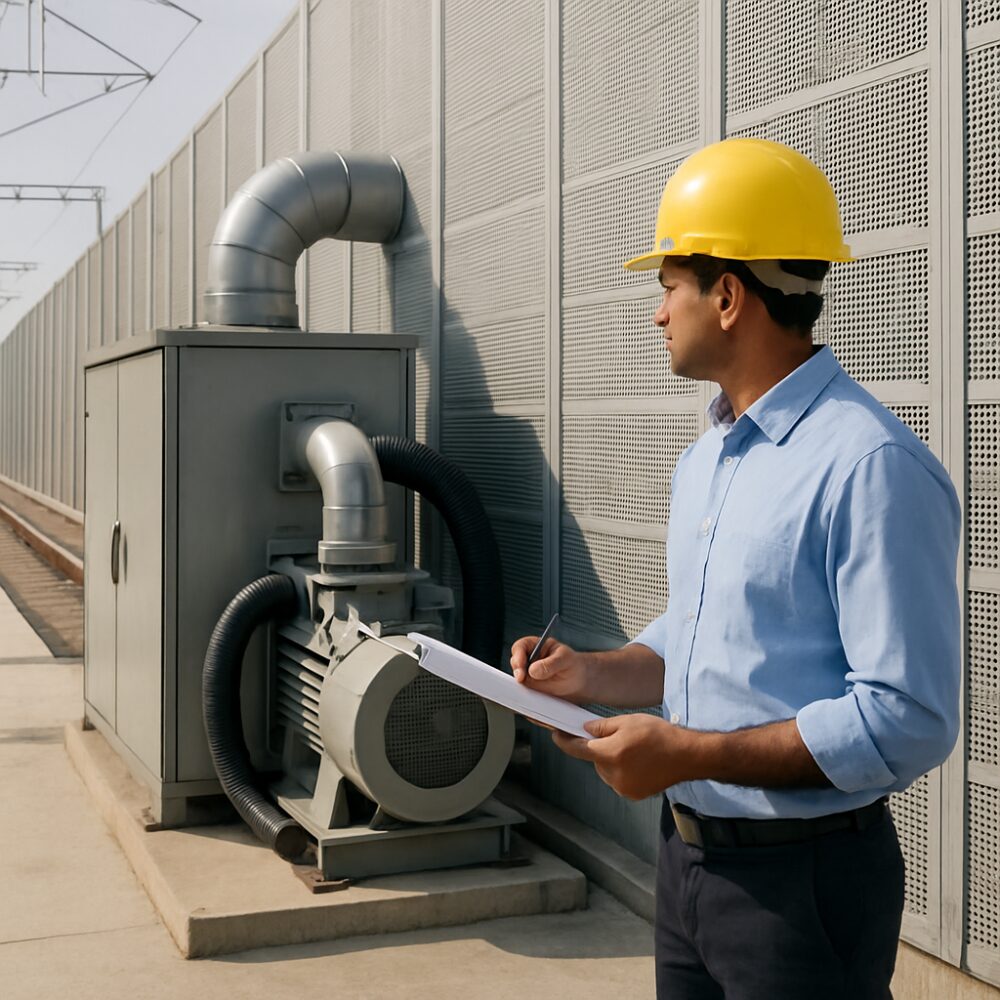
Railway corridors often generate continuous noise from train movement, wheel-rail interaction, horns, vibration and operational activity. When such noise affects nearby buildings or work zones, it can create discomfort, productivity loss and complaints from occupants or stakeholders.
A properly designed railway noise barrier helps create a physical acoustic shield between the noise source and the sensitive area. The exact result depends on the barrier height, panel construction, site geometry, length of coverage, open gaps, and how carefully the system is installed. For many projects, the main goal is better sound control, improved acoustic comfort and a more manageable noise environment.